
Lemcor, located in Newark, New Jersey, made the switch from diesel to electric for their community, their health, and their efficiency.
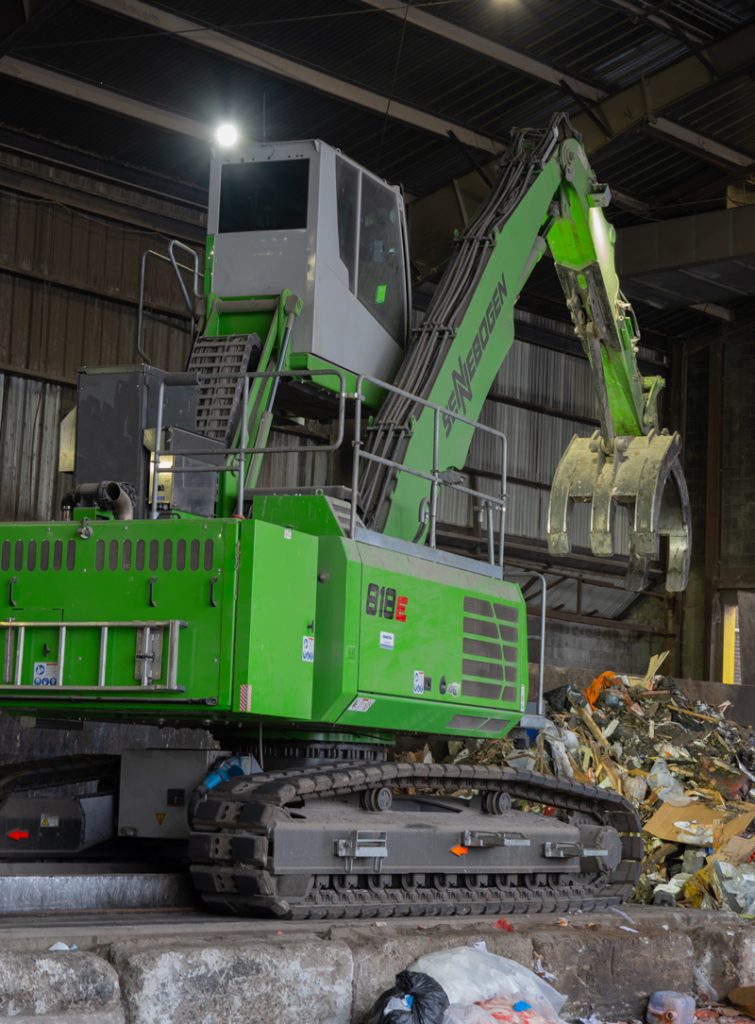
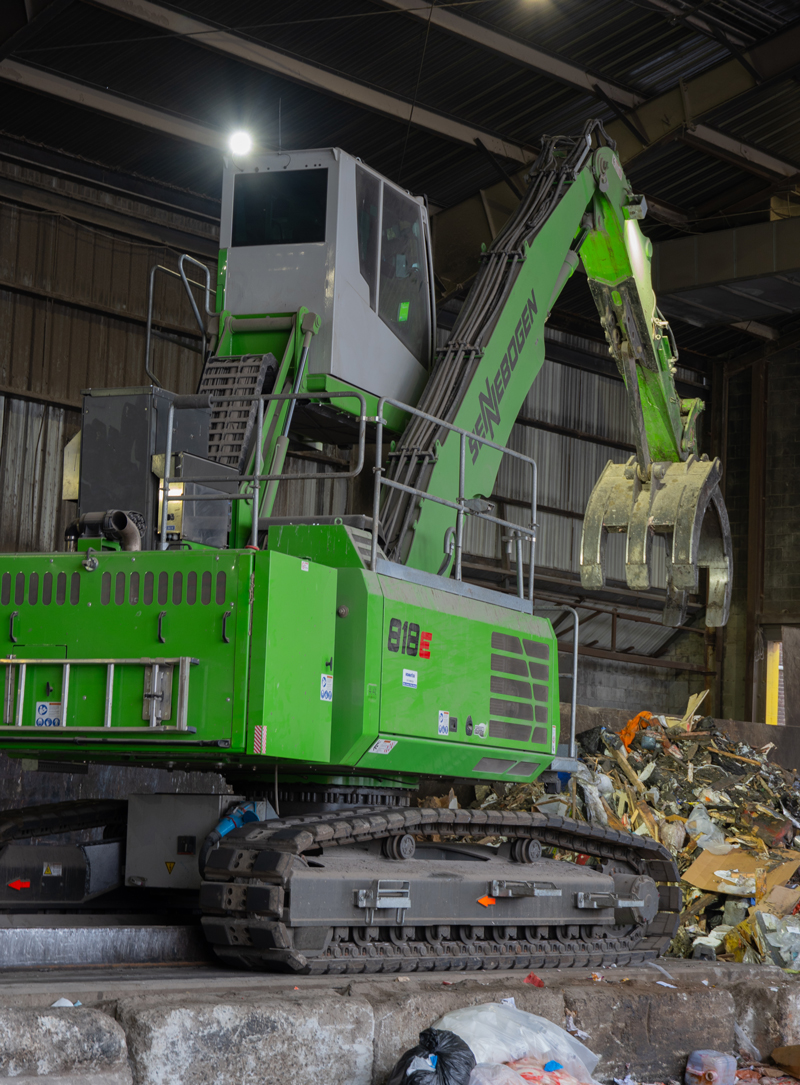
Since 1986 Lemcor has been a solid waste transfer station, currently taking commercial waste. They are permitted to accept roughly 870 tons a day, taking anywhere from 400 to 500 tons on average. Inbound waste comes in via truck and is weighed on a scale. It then dumps into their facility, where their SENNEBOGEN 818E goes to work. It loads the waste into trucks that come through a load-out tunnel, which is then weighed and taken to landfills.
 Why SENNEBOGEN?
“We were very interested in SENNEBOGEN because the equipment we’ve always had, particularly excavators, are really expensive when you are looking to rebuild an engine at 10,000 hours,” said Armand Lembo, President of Lemcor.
Unlike excavators, SENNEBOGEN’s material handlers are designed to pick up rather than dig in the ground. “SENNEBOGEN engineered their machines to pick up and spin, redirecting their hydraulics,” said Armand, which was the solution they needed.
Newark: The Birthplace of the Environmental Justice Movement
Lemcor bought a diesel SENNEBOGEN in the past and has been very satisfied with how it fits into their operation. “There was a big environmental justice movement in New Jersey, which got us curious about electric,” said Armand, “the lead catalyst to why we considered electric equipment was that we are in Newark, the birthplace of the environmental justice movement, and so we have been very sensitive to that. We are here all day too and we want to be in a safe environment.”
Once Armand heard about the opportunity for a grant with the NJDEP, they contacted SENNEBOGEN to move forward. “We were pleasantly surprised when we got the call from our legislative council who said to us, ‘You got ‘em,’” explained Armand, “That was a really cool call and a really scary call because quite frankly we thought it was a long shot. Now we had to sit down and figure it out.”
Engineering Electricity
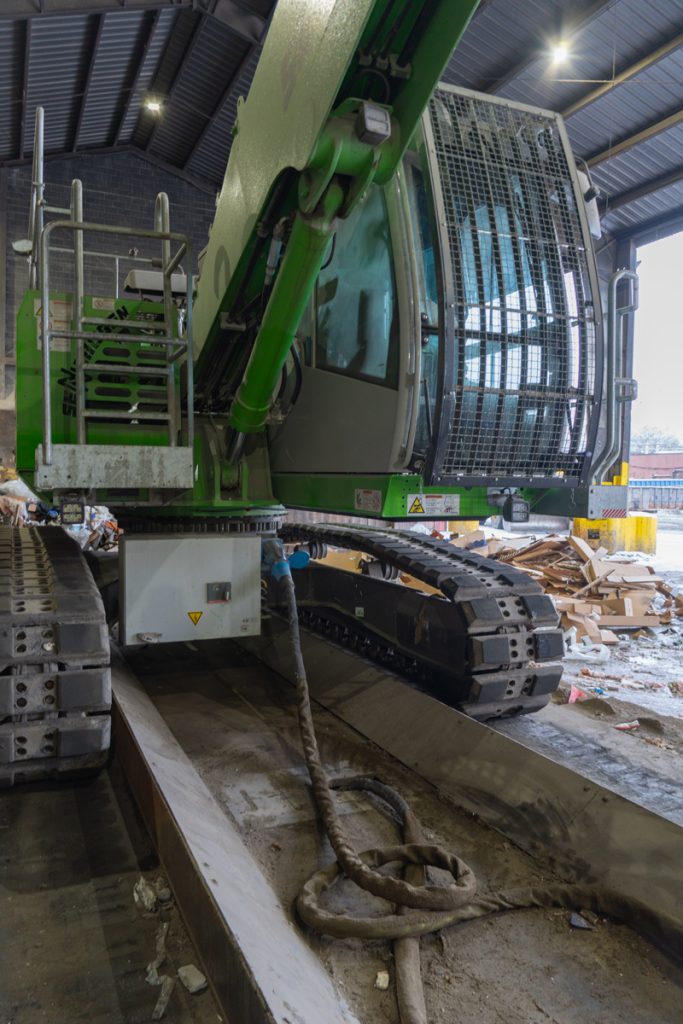
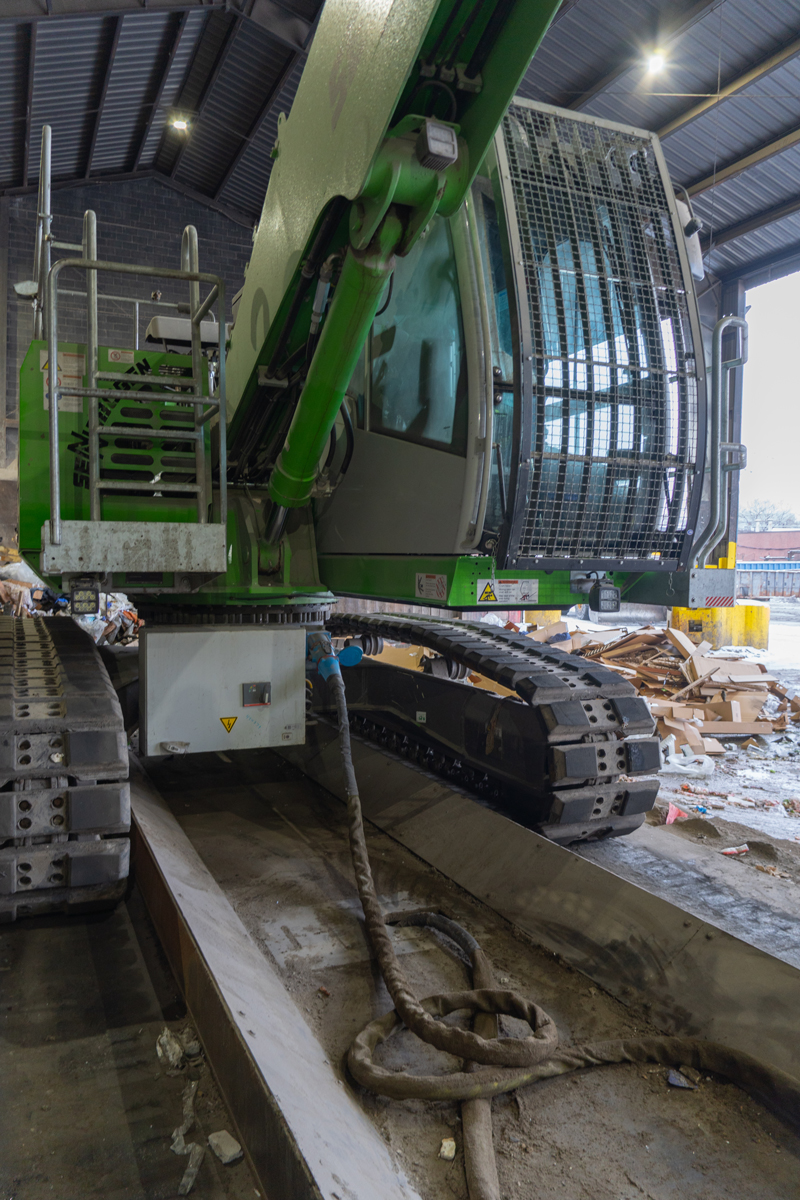
Lemcor’s power room is roughly 100 feet from their SENNEBOGEN, and so the most challenging aspect of going electric was getting the proper amount of electricity where it needed to be. “We brought it in underground and constructed a concrete pedestal to protect it,” described Armand.
The electric cord that goes into the machine is protected by rails. These were installed so that the machine could move east to west but never across the cord itself, which could endanger the operators.
 Sound Difference With Electric
“So far, we love it. It’s just enough power and it’s very efficient,” said Armand. Wilbert Torres, one of Lemcor’s operators added, “There is no need to wait and warm up the machine, you just turn it on and get to work.”
“The biggest thing for me from owning an industrial business has been the cumulative effect on my hearing,” said Armand. Going electric meant that the noise from a diesel engine was eliminated. “I can tell you that replacing those decibels has made a difference. It’s that much more noticeable that we don’t have a machine growling out here for sixteen hours a day.”
Maintenance With Electric
“Maintenance-wise, it’s been a whole other world.” Lemcor’s Electric 818E has a 70,000-hour engine, which has been a big step up from having to rebuild every 10,000 hours.
“A huge bonus is having a pony engine on the back of the machine for emergencies. If you had to get the machine out of the building, you could quickly disconnect, fire it up, and drive away.”
Making the Right Decision
Going electric hasn’t only been beneficial for Lemcor’s operation but for the future. “We’ve been in business here for a very long time. We are here every day, our employees are here every day, and a lot of them live in the community,” explained Armand.
“We just wanted to do the right thing, and it makes it easier to do the right thing when it is economical and operationally efficient.”